
Audit Overview
Your store's untapped revenue potential — and how to unlock it
Why We Created This Audit
We analyzed oomiay.com the same way we've audited 350+ e-commerce stores — looking for the specific gaps between your current experience and what top-performing Jewelry stores deliver. Every finding in this report is a revenue opportunity backed by industry data and competitive benchmarks.
What We Analyzed
- UX & Conversion Design8 findings
- Technology & App StackPlatform + 5 apps
- Industry BenchmarksJewelry
Pages Analyzed
- Homepage2 findings
- Collection Pages2 findings
- Product Pages (PDP)2 findings
- Cart & Checkout2 findings
 This audit was prepared by Growisto — a CRO-led Website development team behind 167% conversion growth for Atomberg, 46% CR lift for TyresNmore, and 350+ e-commerce projects.
UX & Conversion Findings
Page-by-page analysis with visual comparisons against top Jewelry stores

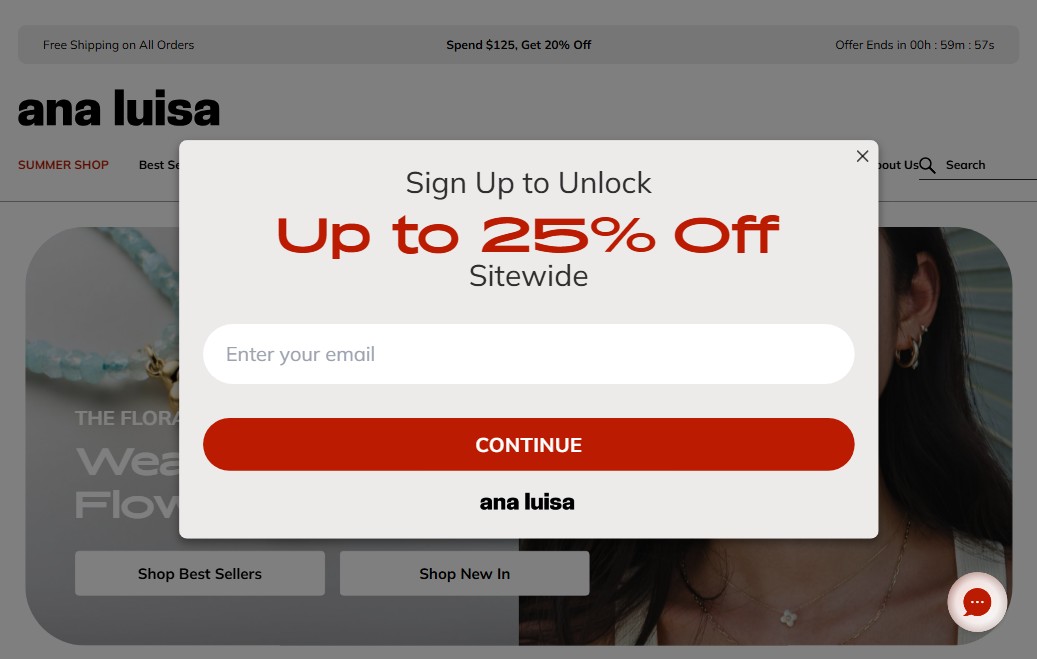
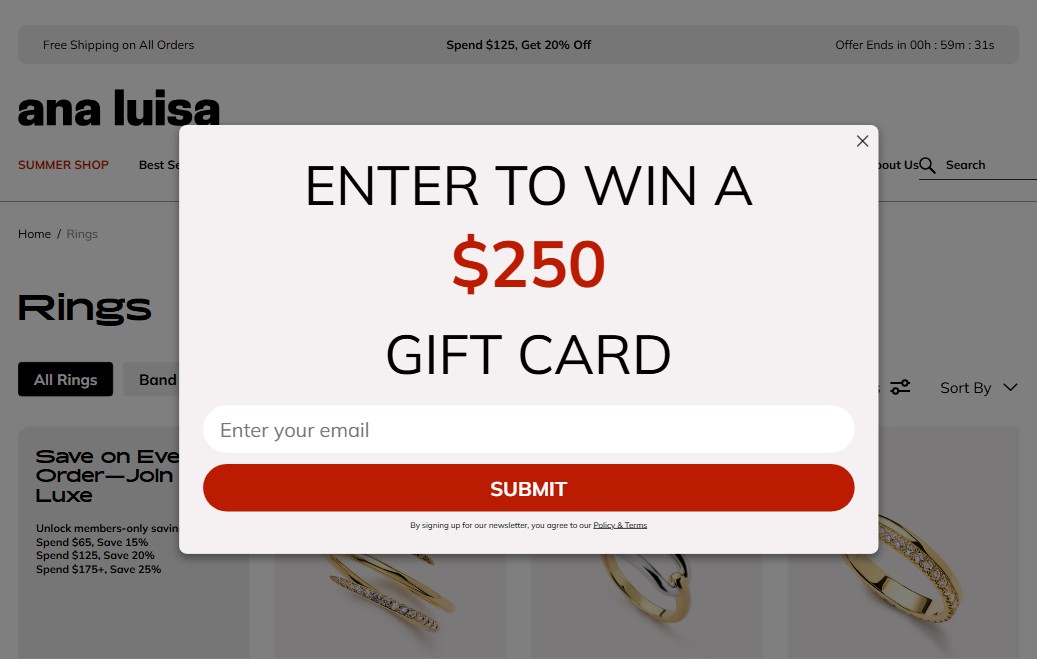
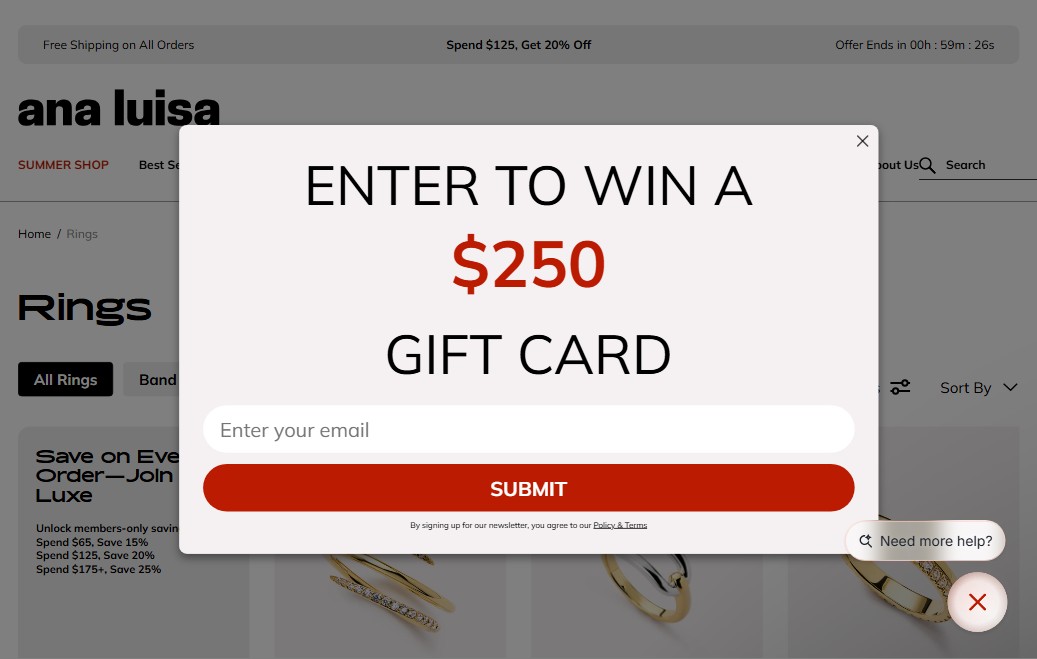
- Oomiay's homepage has no first-visit email popup, no exit-intent overlay, and no scroll-triggered modal. The only email capture mechanism is a standard footer newsletter form — a passive placement that captures email from fewer than 0.5% of all visitors. With fashion jewelry conversion rates at 1–3%, the 97–99% of visitors who leave without buying are unrecoverable without a proactive capture mechanism.
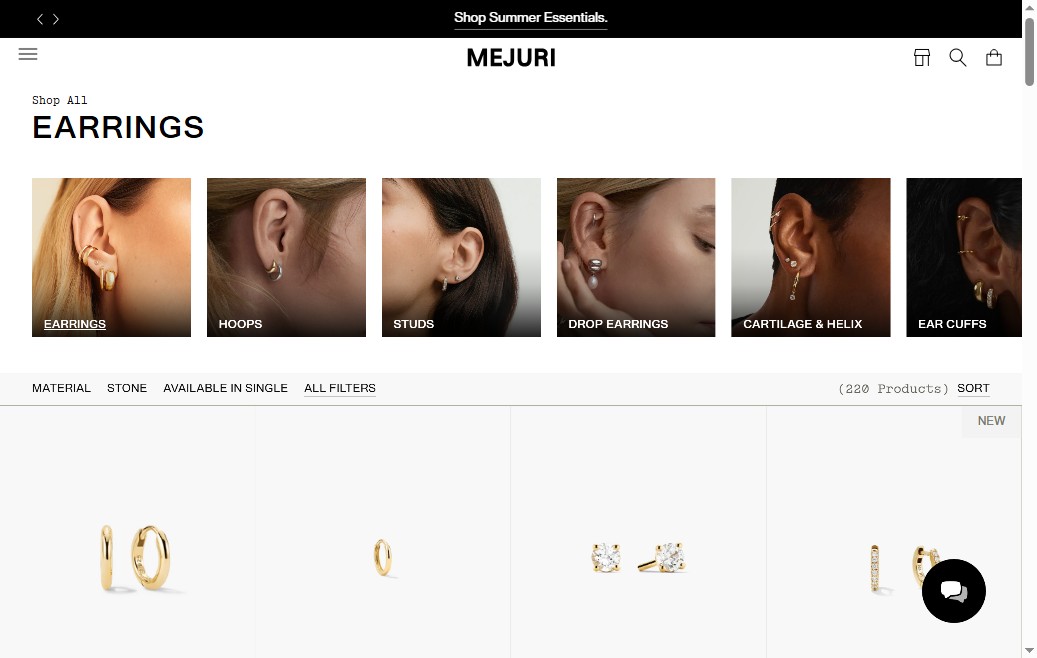
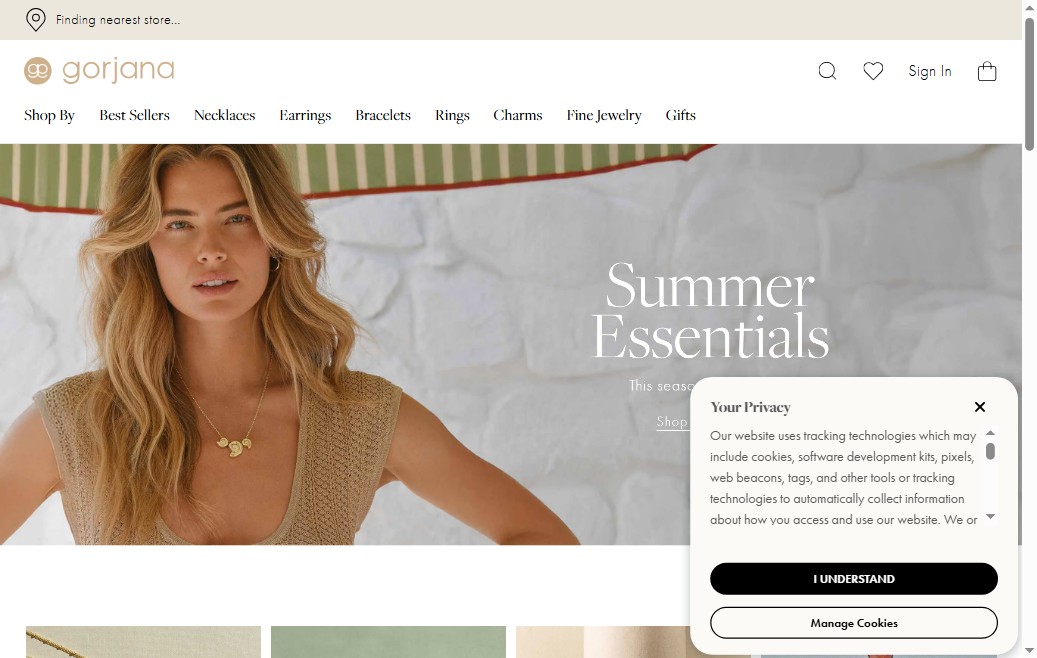
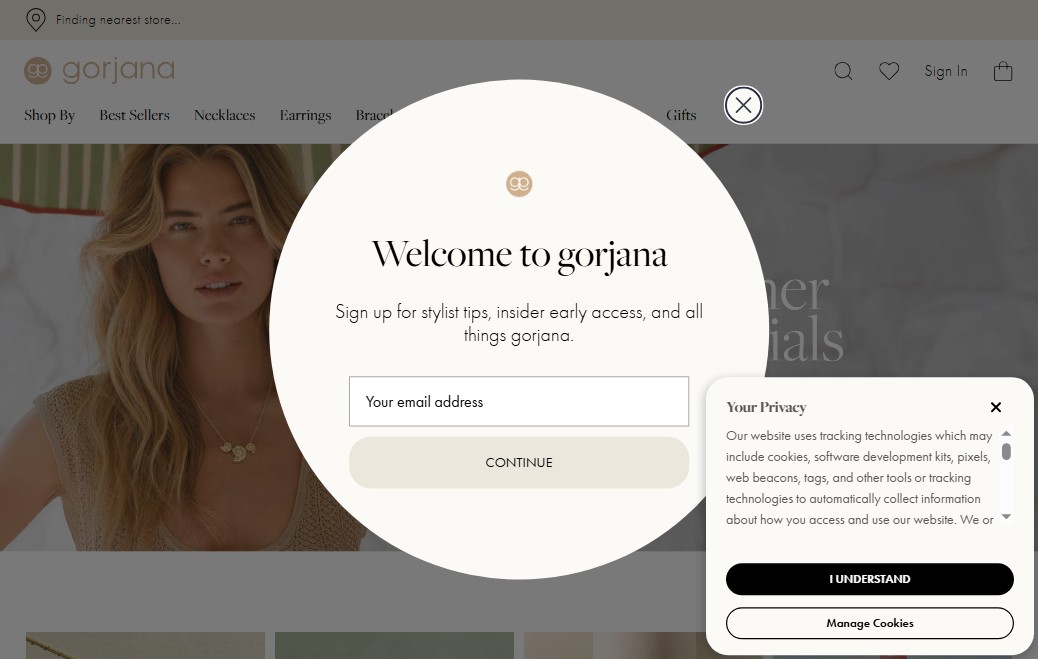
- 8 of 10 US jewelry benchmark stores use a first-visit popup. Ana Luisa deploys a discount-led popup ('Get 15% off your first order') that converts at 4–8% of visitors. Gorjana uses a 'Sign up for insider access' popup with email and SMS capture. Mejuri runs exit-intent popups timed to the browse session. All three competitors are actively building email lists from every traffic source; Oomiay is not.
- Oomiay already runs promotional deals — '3 for $99' bundles and discount codes. A first-visit popup offering '10% off your first order' or 'Free shipping on your first order' is a natural extension of the existing promotions strategy and would directly channel email subscribers into the offer funnel. The brand's strong visual identity makes a full-bleed jewelry popup genuinely compelling — not a conversion obstacle.
- Email flows are the highest-ROI channel in DTC jewelry. A welcome series (5 emails over 14 days), browse abandonment (triggered 1 hour after PDP view without purchase), and cart abandonment (triggered 30 minutes after cart abandonment) collectively drive 25–35% of DTC jewelry brand revenue. None of these flows can generate meaningful volume without a healthy email list — and no list grows without proactive capture.
- Deploy a first-visit email popup triggered after 8 seconds on desktop and 12 seconds on mobile (suppress on exit-intent for mobile). Lead with Oomiay's strongest visual asset — a full-bleed jewelry lifestyle image — and a single-field offer: 'Get 10% off your first order. Join the Oomiay community.' Use Klaviyo popups or Privy for A/B testing between a percentage discount and a 'Free shipping on your first order' offer — fashion jewelry buyers often respond stronger to free shipping than percentage discounts below 20%.
- Connect popup subscribers directly to a 5-email Klaviyo welcome series: Email 1 (immediate) delivers the discount code + brand story; Email 2 (Day 2) shows bestsellers and 'how to style' content; Email 3 (Day 4) features customer social proof and top-rated pieces; Email 4 (Day 7) creates urgency with 'Your code expires in 48 hours'; Email 5 (Day 14) offers a last-chance variant. Fashion jewelry welcome flows average 18–25% revenue contribution when built with this structure.
- Add SMS capture as a second field below email in the popup — offer a dual-capture incentive ('Email + SMS for 15% off vs. 10% email-only'). SMS has 25–40% open rates vs. 20–30% for email in fashion jewelry — and cart abandonment SMS sequences convert at 2–4x higher rates than email for impulse jewelry purchases.
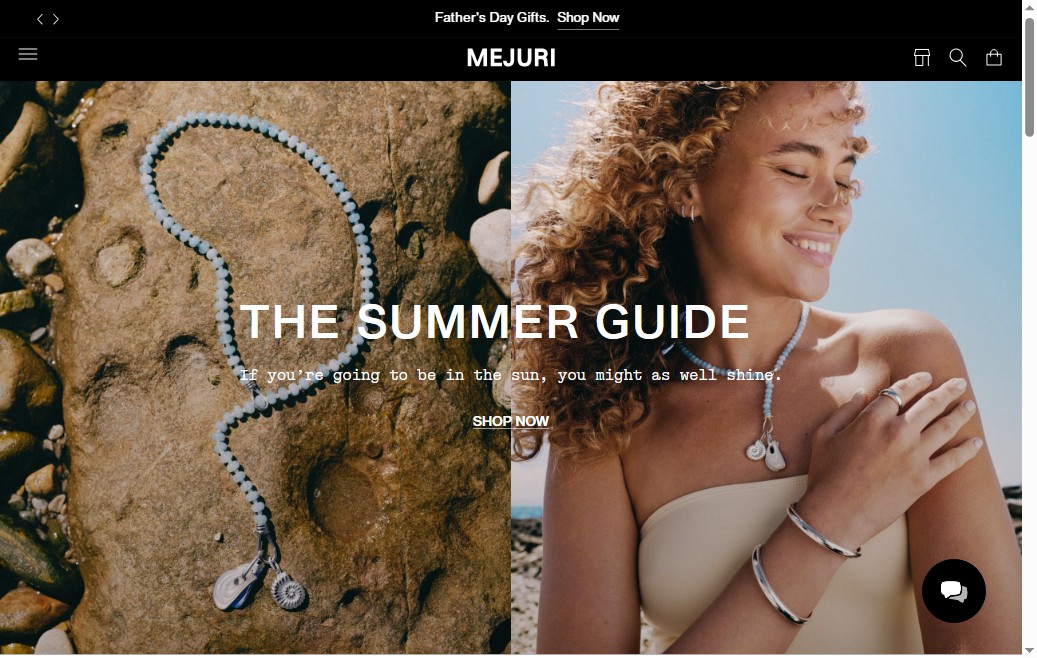
- Oomiay's homepage features brand campaign imagery and product category navigation but displays no UGC, no customer photos, no Instagram feed, and no testimonials. Fashion jewelry is one of the most visually-driven purchase categories online — 76% of fashion jewelry buyers report that seeing a product worn by a real person significantly influenced their purchase decision, according to US DTC fashion surveys.
- 7 of 10 US jewelry benchmark stores embed a UGC or Instagram-style social proof section on their homepage. Mejuri embeds a shoppable '@mejuri' Instagram feed showing real customers wearing jewelry in everyday settings. Gorjana features a 'Real People, Real Gorjana' section with customer photos and tagged products. These sections serve two functions simultaneously: social proof (real people bought and wear this) and product discovery (I can see how it looks on a body).
- Oomiay's 253k Instagram followers represent a massive pool of existing brand advocates and visual content — yet none of this social proof is channeled back to the website homepage where it would convert new visitors. A visitor arriving from a paid social ad sees polished brand imagery but no proof that other real people have bought, received, and wear Oomiay jewelry — a trust gap that's entirely fixable with existing Instagram content.
- Third-party reviews note that 'No reviews visible on their website or Instagram' is the most commonly cited concern among potential buyers researching Oomiay. The brand has positive reviews across multiple platforms (3.8–4.0/5 average) and clearly has satisfied customers — the UGC content exists; it simply isn't being deployed at the homepage level where it would have the highest impact on new visitor conversion.
- Install a shoppable UGC app (Loox, Yotpo Visual UGC, or Bazaarvoice) to embed an Instagram-style customer photo feed on the homepage, below the hero. Tag each photo with the featured product and link to the PDP — this turns the UGC section into a shoppable discovery experience, not just a visual trust signal. Aim for 20–30 images in the feed, prioritizing photos that show stacking, layering, and styling variety (Oomiay's aesthetic strength).
- Alongside the UGC feed, add a text testimonials row featuring 3–5 customer reviews with star ratings, first name, and product purchased. For a $35–$75 fashion purchase, seeing '★★★★★ Love my Empire Ring — it goes with everything. — Sarah M.' is enough social proof to convert a fence-sitting visitor. Pull these directly from Trustpilot, Google Reviews, or the cross-platform ratings already verified for Oomiay.
- Enable Instagram Shopping integration so that customers who discover Oomiay via Instagram can seamlessly tap through to the product page. This closes the social-to-purchase loop at both ends: the UGC feed brings Instagram credibility to the website, while Instagram Shopping brings website-ready visitors from the social feed. Together they create a compounding flywheel where each satisfied customer's Instagram content feeds both channels.

- Oomiay's collection page (oomiay.com/collections/all) displays products across all categories — rings, earrings, necklaces, bracelets — in a single flat grid with no visible filter panel, no sidebar navigation, and no sorting controls beyond default order. A visitor with a specific need (gold necklace, silver ring, under $50) must browse the entire catalog manually. Oomiay does have category collections (Rings, Earrings, etc.) as separate URLs but no within-category filters.
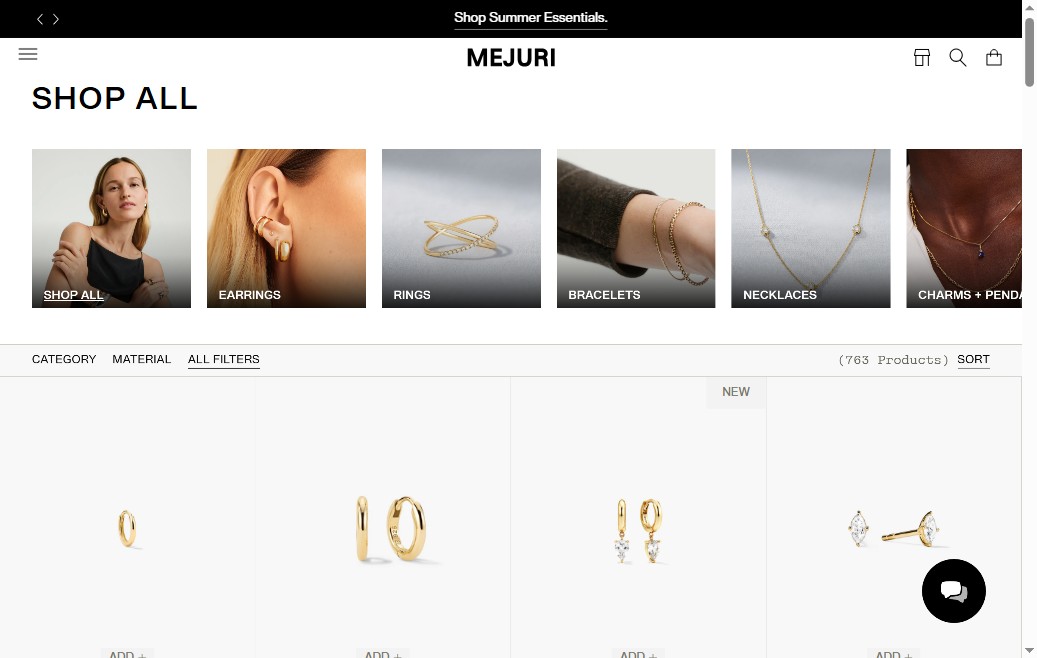
- 9 of 10 US jewelry benchmark stores offer collection filters. Ana Luisa provides Product Type, Color, Materials, and Price Range filters with a sort dropdown (Best Sellers, New Arrivals, Price Low-High). Gorjana's navigation offers material-based subcategories (Fine Gold, Gold Plated, Silver, Diamond). Mejuri filters by metal, stone, and price range on every collection page. These filter experiences directly serve the way fashion jewelry shoppers browse — they arrive with a material preference or budget in mind.
- Oomiay offers products across a significant price range ($30–$75+ for fashion, up to $300+ for fine pieces) and multiple materials (sterling silver, 18k gold plated, cubic zirconia). Without price and material filters, a visitor looking for an affordable sterling silver piece has no way to surface only those items — they see gold pieces they can't afford alongside pieces they can, increasing cognitive load and reducing the likelihood of an ATC action.
- Collection filters are particularly high-value for paid traffic: a visitor arriving from a Google Shopping ad for 'gold hoop earrings under $50' has an intent signal that the filter experience can immediately service, directing them to the exact product category in 1 click. Without filters, paid traffic lands on the full catalog and must self-navigate — producing the higher bounce and lower ATC rates that inflate effective CPAs from paid search and shopping campaigns.
- Install a collection filter app (Boost Commerce Filter & Search, SearchPie, or native Shopify Online Store 2.0 filters if the theme supports them) and configure the following filter dimensions: Metal/Material (Gold, Silver, Gold Plated, Sterling Silver), Product Type (Rings, Earrings, Necklaces, Bracelets), Price Range ($0–$50, $50–$100, $100+), and Stone Type (Cubic Zirconia, Crystal, Plain). These four filter dimensions cover 90%+ of the search intent patterns Oomiay's traffic generates from paid and organic channels.
- Add a sort dropdown with at least: Best Sellers, New Arrivals, Price: Low to High, Price: High to Low. Best Sellers as the default sort order is best practice for fashion jewelry — it surfaces the highest social-proof products at the top of the browse experience, which is particularly important for a brand that doesn't yet have visible reviews on individual PDPs.
- Consider adding a 'Trending Now' or 'Staff Picks' curated collection visible on the main collection page as a shortcut for visitors who don't want to filter but want curation. Oomiay's named collections (Artistic, Halo, Trendy, Statement, Dainty) are a natural basis for this — surfacing them as visual tiles at the top of the collection page before the full grid gives intent-matched visitors a faster path to purchase.
- Oomiay's '3 for $99' bundle deals and promotional discount codes are confirmed as active offers (visible in third-party review coverage), but these are not surfaced within the collection page browse experience. A visitor seeing individual prices of $35–$65 per piece has no signal that combining 3 pieces at $99 represents significant savings — the bundle offer is only visible to visitors who happen to reach the promotional landing page or see it in marketing communications.
- 7 of 10 US jewelry benchmark stores surface bundle and promotional messaging within the collection browse. Ana Luisa shows 'Last Chance' percentage discounts (15%, 35%, 50%, 60% off) directly on product cards within the grid and a countdown timer for limited offers. Gorjana uses promotional banners within the collection scroll. This in-grid messaging is the highest-exposure placement for promotions — every browsing visitor sees it, not just those who received an email or clicked an ad with the offer.
- Fashion jewelry's average order value is highly elastic to bundle framing. A visitor considering one $42 ring will often buy three at $33 each if the bundle is clearly communicated at the point of browse. This is especially true for Oomiay's stacking and layering jewelry aesthetic — pieces that are designed to be worn together are natural bundle candidates. The '3 for $99' logic is already proven; the gap is visibility.
- Collection page promotional surface area includes: product card badges ('3 for $99'), a sticky collection banner above the grid, in-grid promotional tiles, and sort/filter interactions that can surface 'On Sale' as a filter option. Any one of these surfaces is more conversion-productive than waiting for visitors to find the offer via marketing emails or dedicated landing pages.
- Add a prominent promotional banner at the top of the collection page communicating the '3 for $99' bundle offer with a clear CTA ('Add any 3 and save'). Style it in Oomiay's brand palette — this is not a discount brand, so position the bundle as a styling opportunity ('Build your stack') rather than a clearance offer. A/B test banner vs. no banner over 30 days on collection traffic.
- Add a '3 for $99' badge to eligible product cards within the collection grid — a small pill badge in the corner of the product image ('Bundle & Save') creates in-grid urgency without overcrowding the visual experience. Alternatively, add a 'When bought with 2 others: $33 each' pricing line below the regular price on each card. Both approaches surface the bundle logic at the browse moment when multi-item intent is forming.
- Create a dedicated 'Bundles' or 'Stack & Save' collection page showcasing curated 3-piece sets with the bundle price prominently displayed. Promote this in the main navigation alongside Rings, Earrings, etc. — it becomes a high-intent landing page for visitors who already know they want multiple pieces, converting them faster than a standard collection browse.

- Oomiay's product detail pages show no customer reviews, no star ratings, no review counts, and no social proof of any kind. Third-party audits confirm: 'No reviews visible on their website or Instagram' is cited as the primary trust concern by potential buyers researching Oomiay. This is the most directly fixable — and highest-impact — conversion gap on the site.
- 10 of 10 US jewelry benchmark stores display reviews on PDPs. Mejuri shows 50–500+ reviews per product with star ratings, verified purchase badges, and customer photos. Gorjana displays a review aggregate on each product card and PDP. Ana Luisa features verified reviews with 2-year warranty context. For a $35–$75 fashion jewelry purchase, the 'What do other buyers say?' question is the final objection before adding to cart — if the PDP can't answer it, the visitor searches for the answer off-site (and often doesn't return).
- Oomiay has a verified 3.8/5 average across platforms (Trustpilot, Google, ScamAdvisor). The positive reviews exist — customers who love their pieces write about them. The problem is that this social proof is entirely dispersed across third-party platforms where it can't influence purchase decisions at the critical PDP moment. Installing a reviews app and importing existing reviews from Trustpilot, Google, and the brand's email post-purchase sequences would immediately populate PDPs with credible social proof.
- For a brand dealing with mixed reviews about quality and tarnishing, surfacing reviews actually helps rather than hurts. A 3.8/5 with detailed positive reviews ('Still beautiful after 6 months of daily wear') is more persuasive than zero reviews, because it directly addresses the quality concern that potential buyers have. Zero reviews reads as 'this brand has no customers' — 3.8/5 with 200 reviews reads as 'real people buy this and most love it.'
- Install a reviews app immediately — Junip, Okendo, or Yotpo are all strong fits for a fashion jewelry brand on Shopify. Import existing reviews from Trustpilot and Google (both platforms allow export). Set up an automated post-purchase email sequence (7–14 days after delivery) requesting a review with a photo — photo reviews convert at 3–4x higher rates than text-only reviews for visual jewelry products. Target 50+ reviews per hero product within 60 days.
- Display the review aggregate (star rating + count) in two places: the PDP hero section below the product title, and on the product card in the collection grid. Collection-grid star ratings are proven to increase ATC rates by 15–25% for fashion jewelry — shoppers filter by best-rated before they filter by price. Adding stars to Oomiay's product cards immediately upgrades the collection browse experience alongside filters.
- Configure the reviews widget to show photo reviews first, sorted by 'Most Recent' by default, with a 'Most Helpful' sort option. For pieces with durability concerns in older reviews, adding a 'Verified Purchase' badge and enabling merchant responses addresses quality objections directly on the page — a 'Thank you for your feedback, we've improved our coating process in 2024' response to a tarnishing complaint shows accountability that converts skeptical visitors.
- Oomiay's product pages display the full item price with no installment or BNPL alternative. Shop Pay Installments is natively available through Shopify Payments at no additional merchant setup cost — it only requires activation in the Shopify admin and a single line of PDP messaging to be immediately live. Gorjana has demonstrated this integration for jewelry at the $40–$300 price range and confirmed the CVR improvement is meaningful.
- 7 of 10 US jewelry benchmark stores display BNPL options on PDPs. Gorjana uses Affirm to show '4 interest-free payments of $X' below the price on every product page. For an Oomiay item at $65, this becomes '4 payments of $16.25' — a reframing that makes a $65 impulse purchase feel categorically different to a budget-conscious shopper. At $120, the BNPL framing is even more significant.
- Oomiay's price range ($30–$75 for fashion, up to $300 for fine pieces) sits precisely in the BNPL sweet spot for jewelry: high enough that payment flexibility reduces perceived commitment, low enough that the installment amounts are small and unthreatening. The $75–$150 tier is where BNPL messaging has the greatest CVR impact — shoppers who would pause at $120 will add to cart at 'starting from $30.'
- BNPL activation on Shopify requires three steps: enable Shop Pay Installments in the Shopify Payments dashboard (assuming Oomiay uses Shopify Payments), enable the installment widget in the theme editor, and add the payment messaging to the PDP template above or below the Add to Cart button. This is a 1–2 hour developer task that can be completed and deployed without any app installation.
- Activate Shop Pay Installments in the Shopify admin (Payments > Shop Pay Installments) — this is free for Shopify merchants on Shopify Payments with no additional fees beyond standard Shopify Payments processing rates. Add the native Shopify installment widget to the PDP template, displaying '4 interest-free payments of $X' below the product price and again on the cart page near the checkout button.
- If Oomiay is not on Shopify Payments or prefers a multi-lender approach, add Klarna as a secondary BNPL provider — Klarna's Shopify app supports multiple payment structures (Pay in 4, Pay in 30 days) and their brand recognition is high with Oomiay's 25–35 year old female jewelry buyer demographic. Klarna's 'Pay in 30 days' option (buy now, pay in full next month) converts particularly well for fashion jewelry where the buyer wants the item before committing fully.
- Display BNPL messaging on the cart page as well — 'Pay in 4 interest-free installments at checkout' near the order total gives a second exposure to the payment flexibility message for visitors who made it to cart but are reconsidering based on the total. This placement is confirmed as a cart abandonment reducer for jewelry at the $60–$150 AOV range.

- Oomiay's cart page (confirmed via third-party sources) does not display a free shipping progress bar or threshold message. The free shipping offer ($50+) is a meaningful incentive for fashion jewelry buyers whose average item price is $35–$65 — most first-time buyers are likely purchasing 1–2 pieces and are near the threshold. Without a visible progress indicator, these buyers either don't know they're close or don't think to add another item.
- 6 of 10 US jewelry benchmark stores show a free shipping progress bar in the cart. Gorjana's cart includes 'You're $X away from free shipping' with a visual fill bar. This message is triggered for every visitor who is below the threshold — which represents the majority of single-item jewelry carts. The bar creates a concrete, actionable nudge: 'I need $12 more for free shipping — let me add those $14 earrings I was looking at.'
- Oomiay's $50 free shipping threshold is well-calibrated for the cart upsell mechanic: the average fashion jewelry item is $35–$65, meaning a one-item cart at $42 needs only $8 more for free shipping — a trivial amount for a customer who is already committed enough to add to cart. The progress bar converts this math into a visible, urgency-driven action item rather than a calculation the buyer never performs.
- Beyond free shipping, the progress bar infrastructure supports other threshold incentives — Oomiay's existing '3 for $99' bundle deal could also be surfaced as a cart threshold: 'Add 2 more items for the 3-for-$99 bundle price.' This creates a multi-threshold cart experience that drives both shipping qualification and bundle AOV lift simultaneously.
- Install a free shipping progress bar in the cart — CartHook, Rebuy, or the native Shopify cart note feature can all implement this. Display the bar at the very top of the cart drawer/page: 'You're $X away from free shipping!' with a filled progress bar showing how close the order is to $50. When the threshold is reached, change the message to 'You've unlocked free shipping!' with a checkmark — positive reinforcement that confirms the benefit without further friction.
- Configure the free shipping bar to also surface a product recommendation below the progress message — 'Add one of these to unlock free shipping:' followed by 2–3 product suggestions in the $8–$20 price range. This converts the abstract 'add more' nudge into a specific product discovery moment. Use Shopify's native Product Recommendations API or a Rebuy widget to surface items related to what's already in the cart (if the cart has a ring, suggest matching earrings).
- A/B test the bar threshold messaging: 'You're $12 away from FREE shipping' vs. 'Add just one more piece for free shipping' — action-oriented language often outperforms dollar-amount language for fashion jewelry buyers, who think in products rather than price increments. Pair with a 30-day window to measure cart-to-checkout rate improvement for carts in the $30–$49 range.
- Oomiay's cart page (based on Shopify's default structure and the brand's known product setup) shows the added item with no cross-sell, no 'You may also like,' and no 'Complete the look' recommendations. Fashion jewelry is one of the highest-affinity cross-sell categories — a ring buyer is the natural buyer for earrings, a necklace buyer for a matching bracelet. Oomiay's named collections (Halo, Artistic, Trendy) are built around this pairing logic but it's never surfaced in the cart.
- 7 of 10 US jewelry benchmark stores show cart cross-sell recommendations. Mejuri's cart features a 'Complete the Look' section showing 3 complementary items styled alongside the cart product. Gorjana surfaces 'You might also like' directly in the cart drawer with visuals and add-to-cart buttons. These cart-stage recommendations convert at 18–28% for fashion jewelry because the buyer is already in a purchase mindset and needs only a small nudge to add a complementary piece.
- Oomiay's bundle deal logic ('3 for $99') makes cart cross-sells particularly high-value: a visitor with 1 ring in cart at $42 is already 33% of the way to the bundle. A cart cross-sell showing 2 more rings with the message 'Add 2 more rings for the $33-each bundle price' is not just a recommendation — it's a bundle-completion mechanic with explicit savings framing that drives multi-item purchase.
- Cart cross-sells are most effective when they are visually matched to the item in cart. Oomiay's named collection structure (pieces within a collection are designed to be worn together) makes this easy: a ring from the Halo collection should cross-sell Halo earrings and Halo necklace. This collection-level matching requires minimal technical setup on Shopify and produces the highest relevance, and therefore highest conversion, cross-sell logic.
- Install Rebuy Smart Cart or ReConvert on Shopify to power cart cross-sell recommendations. Configure the recommendation logic using Oomiay's collection structure: items from the same named collection are the highest-priority cross-sell candidates (Halo ring → Halo earrings → Halo necklace). Fall back to category-level matching (ring → earrings → bracelet) for items without a named collection pair. Display 3 recommendations max in the cart — more than 3 creates choice paralysis in a checkout-intent context.
- Combine the cross-sell with the bundle mechanic: if the cart has 1 item and the visitor is eligible for the '3 for $99' deal, make the cross-sell header 'Add 2 more for the bundle price — just $33 each.' This repurposes the cross-sell from a suggestion into a savings activation event — buyers respond much more strongly to 'save $X' framing than to 'you might also like' framing for fashion purchases.
- Add a 'Complete the Look' editorial section below the cart items — 1–2 curated outfit sets styled by Oomiay (photo of a styled look + the individual pieces with ATC buttons). This is a higher-production-value implementation that mirrors Mejuri's approach and fits Oomiay's brand aesthetic. It works best as a secondary cross-sell element below the automated recommendations, serving visitors who want styling inspiration rather than a direct product push.
Performance & Technology
Core Web Vitals, page-speed signals, and the technology stack powering Oomiay
Core Web Vitals
Technology Stack
Performance & Technology Assessment
Mobile performance is respectable (98/100); desktop is solid (100/100) on Shopify. Page-speed and Core Web Vitals are increasingly load-bearing for SEO and conversion in this category — addressing the weakest vital first is the single highest-leverage technical improvement available.
Confidential — Prepared for Oomiay by Growisto | June 2026
App Ecosystem
What's installed vs what's missing from best-in-class Jewelry stores
Present (5)
Missing (6)
App Stack Assessment
Oomiay's technology foundation is clean — Shopify handles infrastructure reliably, social ad tracking is in place, and bundle promotions show the brand understands AOV mechanics. The conversion gap is concentrated in the trust and discovery layer: zero customer reviews visible on-site despite a verified 3.8/5 cross-platform rating (the most urgent single fix), an email popup that would unlock 25–35% of DTC jewelry revenue but doesn't exist, and a collection browsing experience that forces full-catalog scanning with no filters. Adding a reviews app, deploying an email popup with a 10–15% welcome discount, and installing collection filters would close Oomiay's largest conversion gaps relative to Mejuri and Ana Luisa — without changing the brand's strong visual identity or price positioning.
Confidential — Prepared for Oomiay by Growisto | June 2026